Cordy Display Font for Small Business Branding
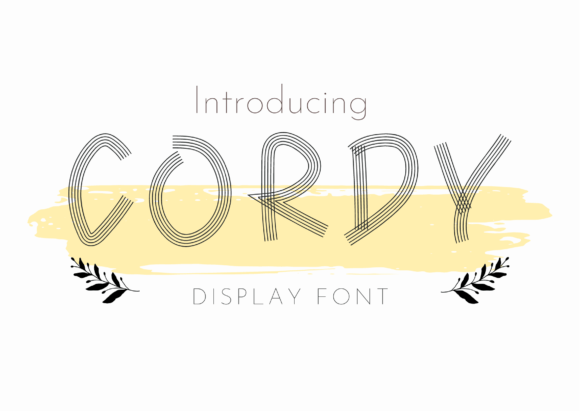
As a small business owner who designs my own packaging, social posts, and product labels, I’ve learned that Cordy isn’t just another decorative typeface—it’s a practical branding tool. Cordy is a unique display font that has a creative line pattern, giving it warmth, rhythm, and subtle personality without sacrificing clarity. It’s not meant for body text or long paragraphs—but exactly where your brand needs standout energy: on mugs, T-shirts, café menus, Instagram quote graphics, and hand-stamped product tags. Because Cordy lives in the Display category of Fonts, it’s engineered to grab attention at a glance while reinforcing your voice—whether you run a ceramic studio, wellness coaching practice, or indie stationery shop.
Cordy for Mugs and Merchandise Design
When you’re screen-printing or sublimating onto mugs, tote bags, or tees, every design element must earn its place—and Cordy does. Its creative line pattern adds tactile charm that reads as handmade, even when printed digitally. Unlike overly ornate script fonts that blur at small sizes, Cordy holds structure across 24–48pt applications, making it ideal for centered quotes (“Brewed with love,” “Slow down, sip deeply”) or short brand slogans. I tested Cordy on matte-finish ceramic mugs, and the line variation gave depth under natural light—no flat vector look. As a Display font, it works best as your primary headline treatment, not body copy. Pair it with a clean sans serif (like Montserrat or Inter) for ingredient lists or care instructions, and you’ll get contrast that feels intentional—not chaotic.
Cordy for Social Media Quotes and Instagram Stories
Your Instagram feed is a visual storefront—and Cordy helps your quote graphics stop scrollers in their tracks. Because Cordy is a unique display font that has a creative line pattern, it adds texture and movement to static images without competing with photography. Try it over soft neutral backgrounds for coaching affirmations (“You’re enough, exactly as you are”) or bold color blocks for boutique promotions (“New arrivals—just dropped”). As a Display font, Cordy scales cleanly from mobile thumbnails to full-screen stories. Just avoid using it below 20pt in digital formats—its character shines when legible, not cramped. For consistency, use Cordy only for main headlines, then switch to your brand’s primary sans serif for captions or CTAs.
Cordy for Product Labels and Packaging Design
If you hand-label candles, skincare jars, or spice blends, Cordy gives your packaging quiet confidence. Its informal yet refined tone fits artisanal brands that want to feel human—not corporate. I used Cordy for “Lavender + Oat Milk” on a kraft label, paired with a thin serif for origin notes—and customers told me it “felt like something I’d pick up at my favorite local shop.” As a Display font, Cordy works best for product names or flavor descriptors—not fine print. Always test print at actual size: some line details soften on thermal printers or low-res inkjet output. And remember—Fonts like Cordy require commercial licensing if you’re selling physical goods. Double-check the license covers merchandise, packaging, and client-facing assets before ordering.
Cordy for Café Menus and Local Business Signage
A chalkboard menu or A-frame sidewalk sign is often your first impression—and Cordy delivers approachability with polish. Its creative line pattern mimics the gentle irregularity of hand-lettering, but with the reliability of digital type. Use Cordy for section headers (“Today’s Specials,” “Cold Brew Flight”) or featured item names (“Maple Cardamom Toast”), then pair with a highly legible sans serif (like Open Sans or Lato) for prices and descriptions. Because Cordy is a unique display font, it avoids the sterility of overused display fonts while staying readable from 3–5 feet away—critical for café signage. Bonus: its informal energy aligns perfectly with neighborhood businesses that value authenticity over formality.
Cordy for Handmade Product Tags and Thank-You Cards
Your thank-you card or woven tag is a tiny moment of connection—and Cordy makes it feel personal without extra effort. Its line-based rhythm suggests care and craft, reinforcing the handmade quality of your goods. I use Cordy for short phrases like “Made with care in Portland” or “Thank you for supporting small”—always set at 18–24pt on thick cotton stock. As a Display font, it’s expressive enough to stand alone on minimal layouts, letting your product (or your story) stay center stage. Avoid stacking multiple Cordy lines tightly; give each word breathing room so the line pattern reads as intentional, not cluttered.
Cordy Font Pairing Ideas for Real Brand Systems
Cordy thrives in contrast. Its creative line pattern needs grounding—so pair it with a neutral, highly legible companion. For food brands: Cordy + Lato (clean, friendly, web-safe). For wellness or coaching: Cordy + Playfair Display (elegant serif for credibility). For modern boutiques: Cordy + Poppins (geometric sans with warmth). Never pair Cordy with another decorative or script font—that dilutes impact. And skip using it in logos unless your entire brand identity leans into expressive, informal energy (think: yoga retreats, indie bookshops, ceramic studios). As a Display font, Cordy earns its place as your accent—not your anchor.
Cordy Licensing Tips for Entrepreneurs and Sellers
Before adding Cordy to your Canva templates, Shopify banners, or printable packaging files, verify the license covers your use case. Most premium Fonts offer separate tiers: desktop use (for design files), web use (for live websites), and extended licenses for merchandise, apps, or resale templates. Since Cordy is a unique display font that has a creative line pattern, and you’ll likely use it on products like mugs or shirts, confirm the license explicitly permits physical product reproduction. Skipping this step risks takedown notices—or worse, losing customer trust if a design gets flagged. When in doubt, choose a vendor that offers clear commercial terms and direct support for small business users.