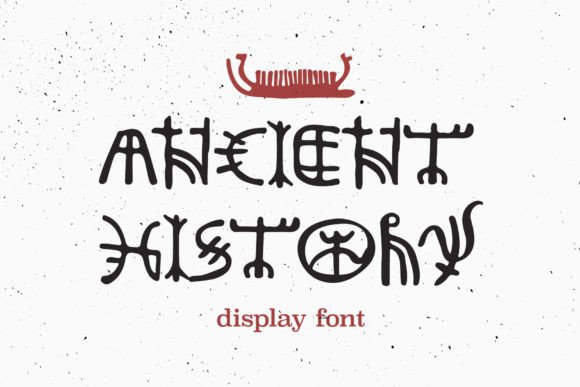
Ancient History Display Font for Thoughtful Editorial Design
It started with a simple request: refresh the header of a slow-cooked lifestyle blog—something warm, unhurried, and quietly intentional. The kind of space where readers linger over seasonal recipes, handwritten journal prompts, and quiet reflections on craft and care. I opened my font library, scrolled past sleek sans serifs and minimalist geometrics, and paused at Ancient History. Not because it was trendy—but because it felt like a quiet invitation to slow down, to honor time, to let typography carry meaning before a single word is read.
Ancient History for Wedding Invitations and Elegant Branding
Ancient History is a display font that breathes history—not in a dusty museum sense, but in the gentle, sun-warmed way old letters might appear on parchment, carved into stone, or inked by hand in a well-loved recipe book. Its strokes have subtle irregularity, soft terminals, and a rhythm that feels both deliberate and tender. When I tested Ancient History for a wedding guide’s cover title and chapter openers, it instantly elevated the tone—whimsical without being childish, historical without feeling academic. It worked beautifully alongside a warm serif body font (like Adobe Caslon or Cormorant Garamond) for printed PDFs and screen-friendly exports alike. As a display font, Ancient History isn’t meant for paragraphs—but it shines in moments that ask to be remembered: monogrammed envelopes, foil-stamped save-the-dates, or delicate script accents beside botanical illustrations.
Ancient History for Recipe Ebooks and Handcrafted Printables
I used Ancient History as the title font for a small-batch recipe ebook focused on heirloom grains and forgotten preserves. Its character lent authenticity—not costume, not cliché—just a quiet nod to tradition. Paired with a clean, airy sans serif (like Inter or Lato) for ingredient lists and instructions, Ancient History created clear visual hierarchy while keeping the mood grounded and sincere. Because Ancient History is a display font, I reserved it for cover titles, section dividers, and pull quotes—never body text. That restraint made each appearance feel intentional. For printables like vintage-style pantry labels or seasonal planner covers, its whimsical charm adds warmth without overwhelming; it invites touch, memory, and personal connection.
Ancient History for Digital Magazine Covers and Editorial Features
In a recent digital magazine layout project—a quarterly editorial feature on storytelling traditions across cultures—I reached for Ancient History to set the tone on the cover and opening spread. Its historical character gave immediate context, while its readability at larger sizes (48–96pt) ensured clarity even on mobile previews. As a display font, Ancient History doesn’t compete with content—it frames it. I paired it with a refined serif for body copy and a light mono-spaced sans for captions and credits. The result? A cohesive, atmospheric identity that felt both timeless and freshly designed. For editorial designers working in Figma, Adobe InDesign, or Canva, Ancient History imports cleanly as OTF or TTF and supports standard Latin characters—ideal for English-language magazines, newsletters, and creator-led publications.
Ancient History for Coaching Workbooks and Mindful Course PDFs
When designing a reflective coaching workbook—structured around seasonal intention and handwritten reflection—the right display font had to feel human, approachable, and gently authoritative. Ancient History delivered exactly that. Its whimsical quality softened the formality of structured exercises, while its historical grounding added weight to prompts about legacy, values, and long-term vision. As a display font, it anchored chapter titles, exercise headers, and quote callouts—never body text, never fine print. I tested it across PDF exports and found it rendered crisply on screen and in print. For course creators and coaches distributing paid workbooks, verifying commercial licensing for Ancient History was essential—and reassuring: it’s cleared for use in digital downloads, client-facing templates, and branded PDFs.
Ancient History for Newsletter Headers and Social Media Graphics
A newsletter header is often the first impression—and the last thing readers remember. I swapped out a generic script font for Ancient History in a monthly letter about slow living and analog creativity. Instantly, the tone shifted: more grounded, more tactile, more memorable. Because Ancient History is a display font, it performed best at 32–60pt in email clients and social graphics—large enough to convey personality, small enough to scale gracefully on mobile. Its whimsical character balanced beautifully with clean sans serif subheads and ample white space. For designers building brand consistency across platforms, Ancient History works as a signature accent—not background noise, but a quiet signature that says, “This is made with care.”
Ancient History for Printable Planners and Creative Font Pairing
In a printable planner redesign—focused on gentle habit tracking and mindful goal-setting—I used Ancient History for weekly headers, month markers, and decorative section dividers. Its historical character added texture without clutter; its whimsical spirit kept things light and joyful. As with all display fonts, success came from pairing: I matched Ancient History with a highly legible sans serif (like Poppins or Open Sans) for daily entries and notes. No ligatures or stylistic alternates were needed—Ancient History includes a single, confident weight, perfect for intentional emphasis. For printable sellers and independent designers, this simplicity is a strength: no overcomplication, just one expressive, well-crafted display font that does exactly what it promises.
If you’re choosing fonts for projects that value authenticity, warmth, and quiet distinction—Ancient History is more than a typeface. It’s a thoughtful pause in the scroll. A whisper of continuity in fast-moving feeds. A display font that remembers how letters once felt handmade—and helps your readers feel seen, too.